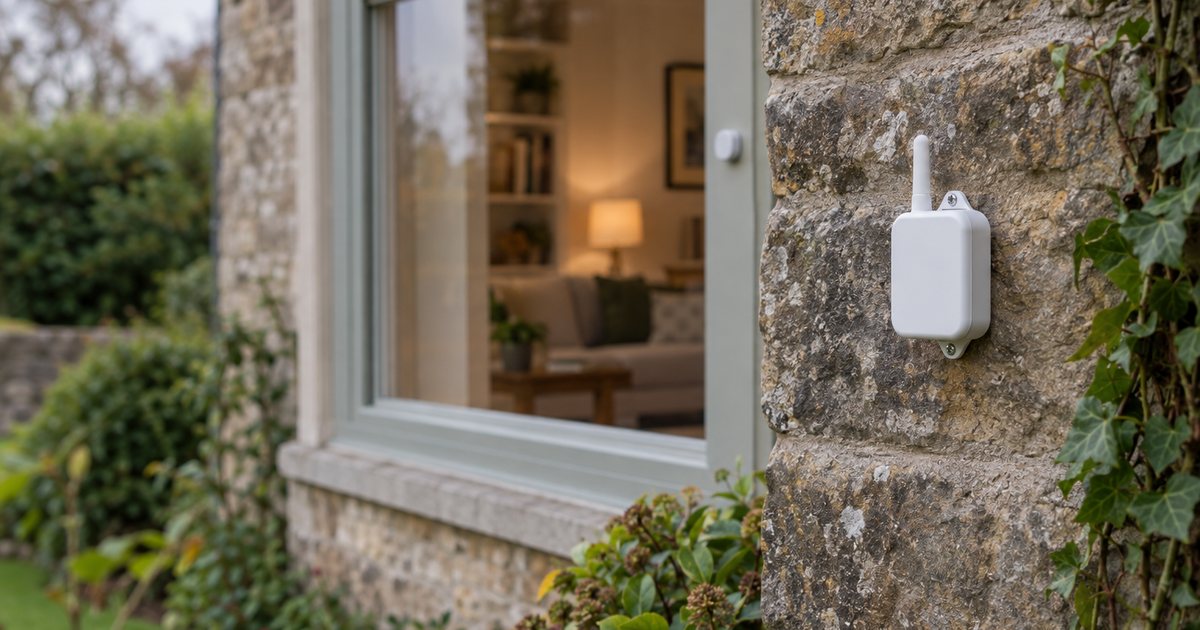

Beyond Zigbee and WiFi
Two more low-power networks for the smart home
When designing a low-power smart home solution, we can find multiple network technologies like Zigbee or WiFi, which we already compared in Zigbee or WiFi devices for home automation.
However, there are other low-power technologies that must also be considered, since they have very interesting attributes as well. This post is about Z-Wave and LoRaWAN, low-bandwidth networks that work around 868.4 MHz in Europe. Each of them has its own benefits for home automation applications.
The third comparison of the set puts Z-Wave against Zigbee: Choosing Zigbee or Z-Wave for home automation.
The basics
What are Z-Wave and LoRaWAN?
Both network technologies operate in the sub-1 GHz radio frequency range, which means they can reach a longer range than many other protocols with a fraction of the power consumption.
Z-Wave
- A wireless protocol that uses mesh networking to improve its performance
- Devices can be controlled from smartphones or tablets
- Suited to controlling multiple devices in different rooms or areas of the house
- A wide range of compatible devices, backed by a large ecosystem of manufacturers and hubs
A platform is needed to use them
LoRaWAN
- A wireless protocol focused on low power consumption
- Longer battery life, which suits IoT applications such as home automation systems
- Its long range lets it cover larger areas than Z-Wave
Sensors reach the platform through a network server
Z-Wave
Benefits of Z-Wave, and where it falls short
- Fast, reliable mesh. Z-Wave operates as a mesh network that uses low-energy radio waves in the 800 to 900 MHz range, carrying small data packets reliably and quickly, with minimal latency.
- Interoperability. Considered one of its most valuable features: certified devices are compatible with one another, whoever their manufacturer.
- Easy to adopt. Its open-source roots, ease of installation, low power consumption, minimal interference, affordability and robust security make it an attractive option.
- Security. Its integrated Security 2 (S2) framework encrypts all internal communications and establishes a highly secure tunnel for the connection to the cloud.
- Limited coverage range. A larger area may need more Z-Wave devices for adequate coverage, so the cost of implementation may increase, particularly if additional Z-Wave repeaters or routers are needed.
LoRaWAN
Benefits of LoRaWAN, and its limits
- One gateway, many sensors. A single LoRaWAN gateway can be connected to multiple sensors on doors and windows.
- Lower costs. The reduced maintenance costs of the sensors allow more use of IoT in smart homes, and its easy installation and setup reduce production costs, a clear advantage for IoT industries.
- Range for care at home. Its extensive range makes it suitable for personal care applications for the elderly or for people who may need occasional medical attention.
- Power-efficient sensors. Sensors are essential, and keeping them power-efficient is crucial: LoRaWAN optimizes sensor efficiency through its low data usage.
- Limited capacity. Because it uses a shared frequency band, LoRaWAN's network capacity is restricted, and congestion may occur.
- High latency. LoRaWAN has relatively high latency, which can hurt the performance of real-time applications.
Side by side
Z-Wave and LoRaWAN feature comparison
| Feature | Z-Wave | LoRaWAN |
|---|---|---|
| Range | 10 to 100 m | 3 to 14 km |
| Frequency | 868 / 908 MHz | 430 / 433 / 868 / 915 MHz |
| Maximum number of devices | 232 | Not restricted |
| Data rate | 9.6 to 100 kbps | 25 to 50 kbps |
The final decision
Which one is better for home automation?
For most applications, Z-Wave will be the better choice because of its wider device compatibility and reliable signal strength.
Choose Z-Wave
- For most home automation applications
- Wider device compatibility
- Reliable signal strength
Choose LoRaWAN
- When you need a longer range
- When you need power-efficient devices
Whichever technology you use, setting up a smart home has never been easier. With the right devices and protocols in place, you can create a comfortable and connected environment in no time.
Your project
From the protocol to the platform
The radio is only the first link. On Thinger.io, LoRaWAN devices arrive through their network server, with plugins for The Things Stack, LORIOT and ChirpStack that bring every server's messages into one schema; Device connectivity shows the protocols the platform speaks and how each one reaches it.
You can also follow Thinger.io's CEO on LinkedIn for updates on IoT-related subjects and technology.
Have an IoT idea?
If you are a company with an IoT idea and do not know how to develop it, contact a member of the Thinger.io team.