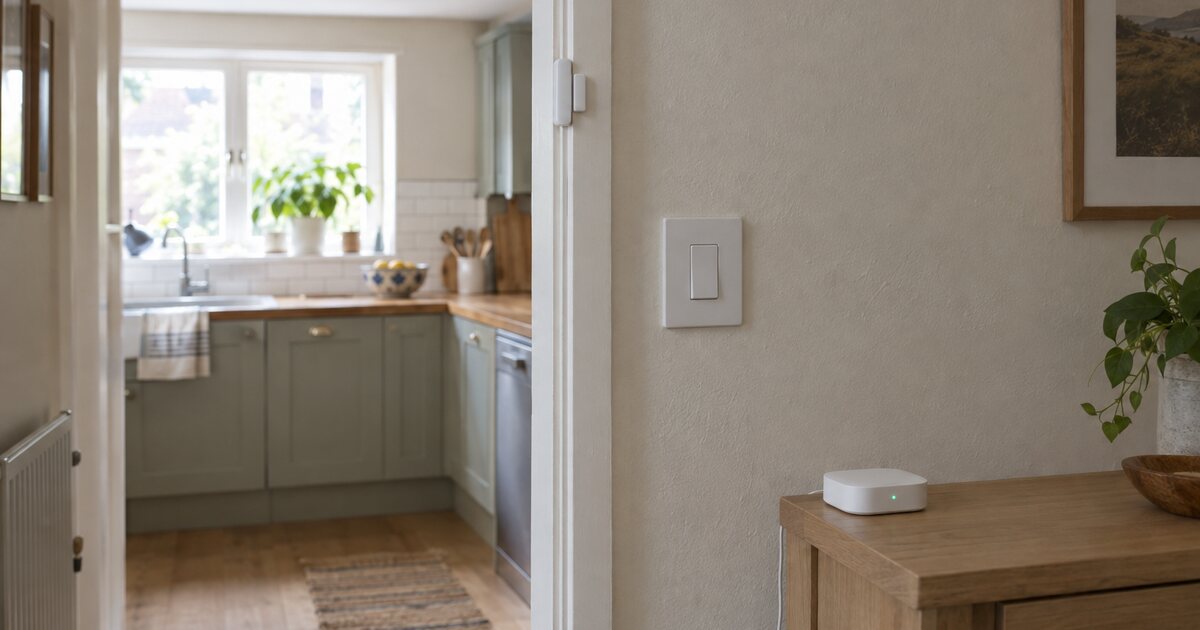

Home automation
Two popular protocols, with important differences
When it comes to home automation, Zigbee and Z-Wave are two of the most popular technologies to choose from. Both offer reliable and secure communication protocols for connecting devices in a smart home system.
However, there are some important differences between Zigbee and Z-Wave that you need to consider before making your choice.
The two previous posts on home automation compared WiFi and Zigbee and Z-Wave and LoRaWAN. This one closes the comparison with the pair that remains: Zigbee and Z-Wave.
The protocols
Home automation's most popular protocols
Zigbee
Zigbee is an open-source, low-power wireless technology that operates in the 2.4 GHz frequency band. It can create a mesh network that allows devices to communicate with each other over a range of up to 75 feet, and that range can be extended with repeaters.
This makes Zigbee ideal for large homes or those with thick walls that limit signal strength. It also supports a large number of connected devices, up to 65,000.
Z-Wave
Z-Wave is another popular wireless technology used in home automation systems. It operates on the 908 MHz frequency band and has a typical range of 30 to 100 feet, depending on environmental conditions.
It also creates a mesh network, but one limited to a total of 232 devices. Z-Wave networks are typically simpler and less prone to interference than Zigbee systems, since they operate on a different frequency band.
| Feature | Z-Wave | Zigbee |
|---|---|---|
| Range | From 30 to 100 meters | From 10 to 100 meters |
| Frequency | 860/908 MHz |
|
| Maximum number of devices | 232 | For domestic use, nearly 65,000 devices |
| Data rate | 9.6-100 kbps | 25-50 kbps |
Points to take into account
Z-Wave and Zigbee side by side
Both Zigbee and Z-Wave provide secure connections for home automation, but the two technologies have distinct advantages and disadvantages when compared side by side. Choosing between them depends on the requirements of each particular smart home setup.
Zigbee
- Longer range than Z-Wave
- Supports more devices
- An open standard
- More expensive
- A more complex setup
- Can be prone to interference from other wireless devices within the same network
Z-Wave
- Simpler to set up
- Less sensitive to interference
- Shorter range
- Supports fewer devices
- A closed standard
The open standard against the closed one is a huge difference between the two. No doubt the fact that Zigbee is an open standard makes many people interested and helps its growth: it can be leveraged by many organizations and for very different uses.
The final decision
Which one fits your home
Ultimately, the choice between Zigbee and Z-Wave for home automation depends on your individual needs and preferences.
Choose Z-Wave
- For small homes with a limited number of connected devices, Z-Wave is often the preferred choice, thanks to its quick setup time and low cost.
- If cost is a major concern and you don't need to worry about network size, Z-Wave could be the right choice.
Choose Zigbee
- For larger homes or those with more complex requirements, Zigbee can provide a better overall solution, thanks to its higher throughput and larger network capacity.
- If you're looking to expand your wireless capabilities or want maximum performance with minimal interference, Zigbee could be the better option.
Consider all the pros and cons before making a decision, to find the solution that works best for your home automation needs. Whichever you choose, both Zigbee and Z-Wave are really good choices for making your home a smarter, more connected place.
Have an idea to develop further with IoT?
At Thinger.io we work every day to help companies with our IoT solution. If you have an idea you think you can develop further with IoT but don't know how, arrange a meeting with one of our experts.