Selected
Helping connect every school in the world
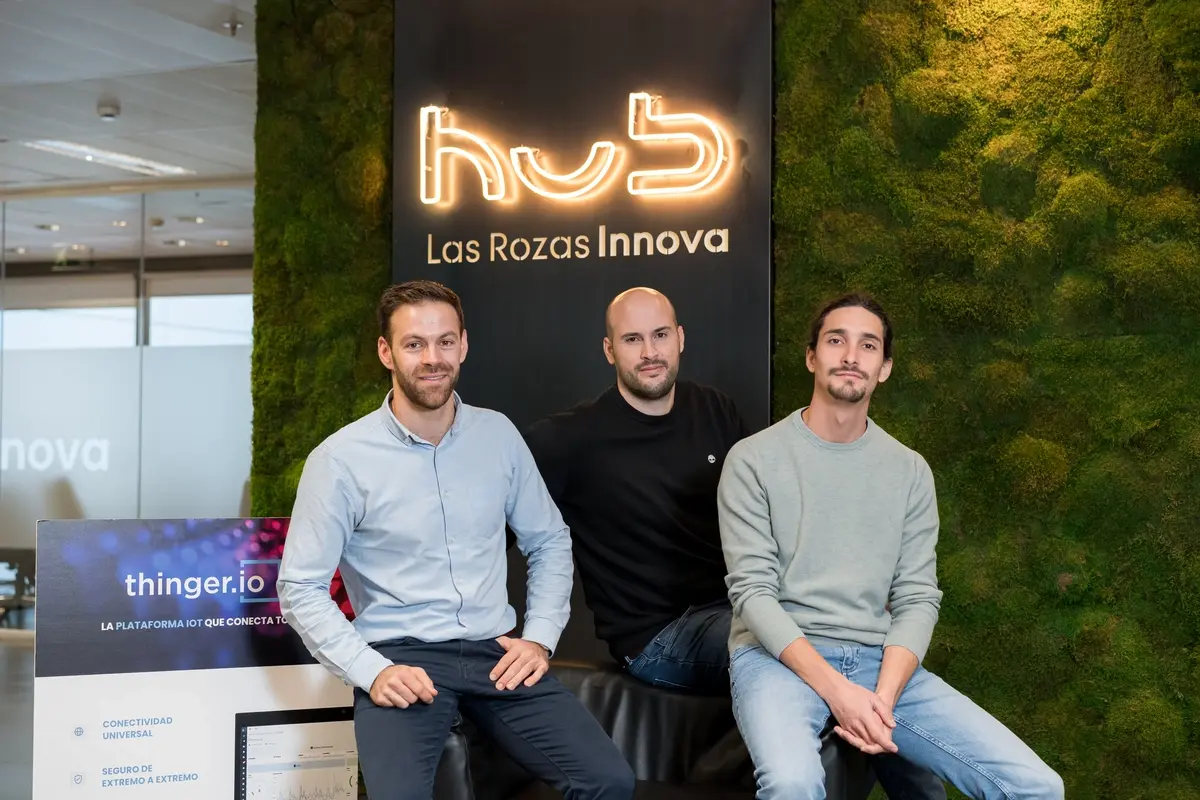
Thinger.io has been selected to participate in the Giga Accelerator Programme, an initiative led by UNICEF and the International Telecommunication Union (ITU).
The programme aims to connect every school in the world to the Internet and to ensure that all young people have access to information, opportunities and choice.
About Giga
What is Giga and why does it matter?
Launched in 2019, Giga is a global initiative dedicated to closing the digital divide by connecting every school to the Internet.

Its work is structured around three core pillars:
Map
Model
Contract
To date, Giga has mapped more than 2.2 million schools across 142 countries, and its global map of connected schools gathers real-time connectivity data from over 100,000 of them.
- 2.2M+
- schools mapped by Giga
- 142
- countries covered by the map
- 100,000+
- schools sending real-time connectivity data
The accelerator
Ten organisations, chosen from 350 applicants
The Giga Accelerator Programme supports organisations developing innovative, scalable and open technologies that improve school connectivity in underserved regions.
Over the course of several months, participants receive mentorship, technical guidance and opportunities for global visibility and collaboration.
The selection committee chose 10 organisations from a pool of 350 applicants for their transformative approaches to accelerating school connectivity.

Among them are three Spanish finalists:
Thinger.io
Kreios Space
Moai Analytics
The remaining international finalists work on solutions such as solar-powered Internet access points, portable digital classrooms, community-built hubs, open-source network management and affordable Wi-Fi deployments. Read the full announcement on giga.global: Giga Accelerator selects most promising solutions.
Our role
Two open-source developments for school connectivity
As part of the programme, Thinger.io will focus on two concrete open-source developments that directly support scalable, affordable and resilient school connectivity.
Thinger.io client for the Zephyr RTOS
ChirpStack in our LoRaWAN plugins
The Zephyr client will allow device manufacturers and integrators to build Giga-ready hardware with seamless, lightweight communication capabilities.
Integrating ChirpStack within our LoRaWAN Network Server plugins, which install from the Marketplace, helps schools and communities operate devices in low-connectivity or energy-constrained environments.
Update: the Zephyr client is now available as a preview, IOTMP-Zephyr on GitHub, listed with the other open-source clients on the Device connectivity page.


What it means
Open standards, accessible infrastructure
Both initiatives reinforce Thinger.io’s commitment to open standards and accessible digital infrastructure, and will contribute to Giga’s mission of delivering reliable connectivity to the children and schools that need it most. The selection is one of the milestones on our About page.
Build on the same open tools
The LoRaWAN network server plugins and the open-source device clients behind this work are part of the platform.