

Case study
SeaWater Analytics: the state of the beach, read from the water
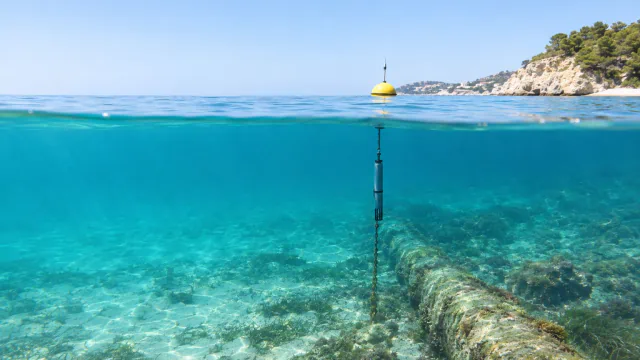
A Spanish project that moored sensor buoys off bathing beaches, so citizens, tourists and coastal towns could check the quality of the water, the jellyfish situation and the state of the beach from a single app.
- Buoys on the bathing water
- Live water quality index
- One app for the whole beach
- Jellyfish alerts from citizens
- Client
- SeaWater Analytics
- Sector
- Bathing water
- Location
- Xàbia, Spain
- Connectivity
- HTTP
- Hardware
- Moored sensor buoys
- Deployment
- Thinger.io Cloud
Who they are
Two engineers with an eye on the coast
SeaWater Analytics was founded by two engineers, Javier Colmenarejo and Javier Moya. Their subject was the coast: Spanish beach towns live off their water, yet it sits downstream of outfalls and uncontrolled discharges that municipal infrastructure struggles to watch.
The project set out to give those towns reliable information on bathing water quality, beach occupation and the jellyfish drifting toward them.
Profile
SeaWater Analytics
- Founders
- A civil engineer and an industrial engineer
- Origin
- A master’s in big data and business intelligence, then the pre-acceleration programme, at Escuela de Organización Industrial, Madrid
- Partners
- TEC4Talentum Servicios Tecnológicos Avanzados
- Pilot
- Xàbia (Alicante), presented to the town’s tourism department
The measurements
What the buoys read
Each buoy carries a chemical sensor set reading acidity, salinity, oxygenation and temperature at depth, and the app adds a second instrument the buoys cannot carry: the beachgoers themselves. The sheet below redraws the measurements and app views the project described in its public material.
Acidity, hour by hour
FIG. 01The buoys track the acidity of the bathing water continuously, so a discharge shows up as a dip in the pH record rather than a rumour on the sand.
PH · CONTINUOUS · DISCHARGE EVENTS ON THE CURVE
Salinity and the rising plume
FIG. 02Treated water from submarine outfalls is lighter than the sea, so it rises. The buoys float exactly where it surfaces, and salinity is where the mix shows first.
SALINITY · BUOY OVER THE OUTFALL · EFFLUENT RISES
Oxygen, day and night
FIG. 03Dissolved oxygen breathes with the day and reacts to what the water receives, a second chemical witness alongside the pH record.
DISSOLVED OXYGEN · DIURNAL CYCLE · SATURATION REF
Temperature at depth
FIG. 04Temperature is read at the same depth as the chemical sensors, closing the picture of the water column bathers actually swim in.
TEMPERATURE · SAME DEPTH AS CHEMICAL SENSORS
One index for the swim
FIG. 05Everything lands in one number: the Sea Water Index, shown in the app next to the flag of the beach and refreshed within an hour of measurement.
SEA WATER INDEX · FLAGS · WITHIN THE HOUR
Jellyfish, reported by the crowd
FIG. 06The crowd is a sensor too: beachgoers report jellyfish sightings from the app, and the sightings come back to everyone as alerts on the beach map.
CITIZEN REPORTS · SIGHTING PINS · JELLYFISH ALERTS
Results
What it means on the sand
For bathers, the whole question, can I swim here today, fits on one screen: the beach flag, the Sea Water Index, the day's jellyfish sightings, weather and sea state, with anyone on the sand able to add a sighting.
For municipalities, it was a watch over their main tourist asset: each town chose what to monitor, and readings reached the app within an hour.
Our smart buoys can establish a water quality index.
As stated by co-founder Javier Colmenarejo in an interview with MuyPymes, June 2020. Translated from Spanish.


Under the hood
How the buoy network runs
Every buoy is an HTTP device on the Thinger.io cloud, so mooring another buoy means provisioning another device, not building software. When a buoy reports, a callback pre-processes the reading and stores it in a data bucket.
The Node-RED plugin picks it up in real time, enriches it with app sightings and open data on waves, wind and tides, and forwards it to the analysis system that condenses everything into the Sea Water Index.
References
- TecnoAqua (May 2020). Nace Sea Water Analytics, una startup que ayuda a conocer el impacto medioambiental del ser humano en las aguas de las playas. tecnoaqua.es
- MuyPymes (June 2020). Javier Colmenarejo, de Sea Water Analytics: “Nuestras boyas inteligentes pueden establecer un índice de calidad del agua”. muypymes.com
- Xàbia al Día (2020). La start up Sea Water Analytics prueba en Xàbia sus boyas para analizar la calidad de las aguas. xabiaaldia.com
- ESMARTCITY (June 2020). Boyas inteligentes y una app permiten conocer el estado de las playas en tiempo real. esmartcity.es
- Emprendedores. Tecnología al servicio de la calidad del agua de las playas españolas. emprendedores.es
- CompassList (2020). How Sea Water Analytics is using IoT to help keep beaches safe in Covid-19 era. compasslist.com
Keep reading
More success stories

UPM and UC3M: hydrology measured sensor by sensor
A dense NB-IoT network of soil moisture probes and water level gauges across two catchments.
Read the case study
Arvum: agronomy know-how delivered as a service
Growers irrigate by soil profile data, guided through AG-ZOOM, the firm's own platform.
Read the case study
MAPHI: fresh food grown in Antarctica
A hydroponic module at Marambio Base grows fresh greens at -30 °C outside.
Read the case studyNext step
Put your coast on the platform
SeaWater Analytics ran its buoy fleet on the same platform any team can start with. If you want to monitor bathing water, coastal discharges or any fleet of marine sensors behind your own service, we can help you get there.